
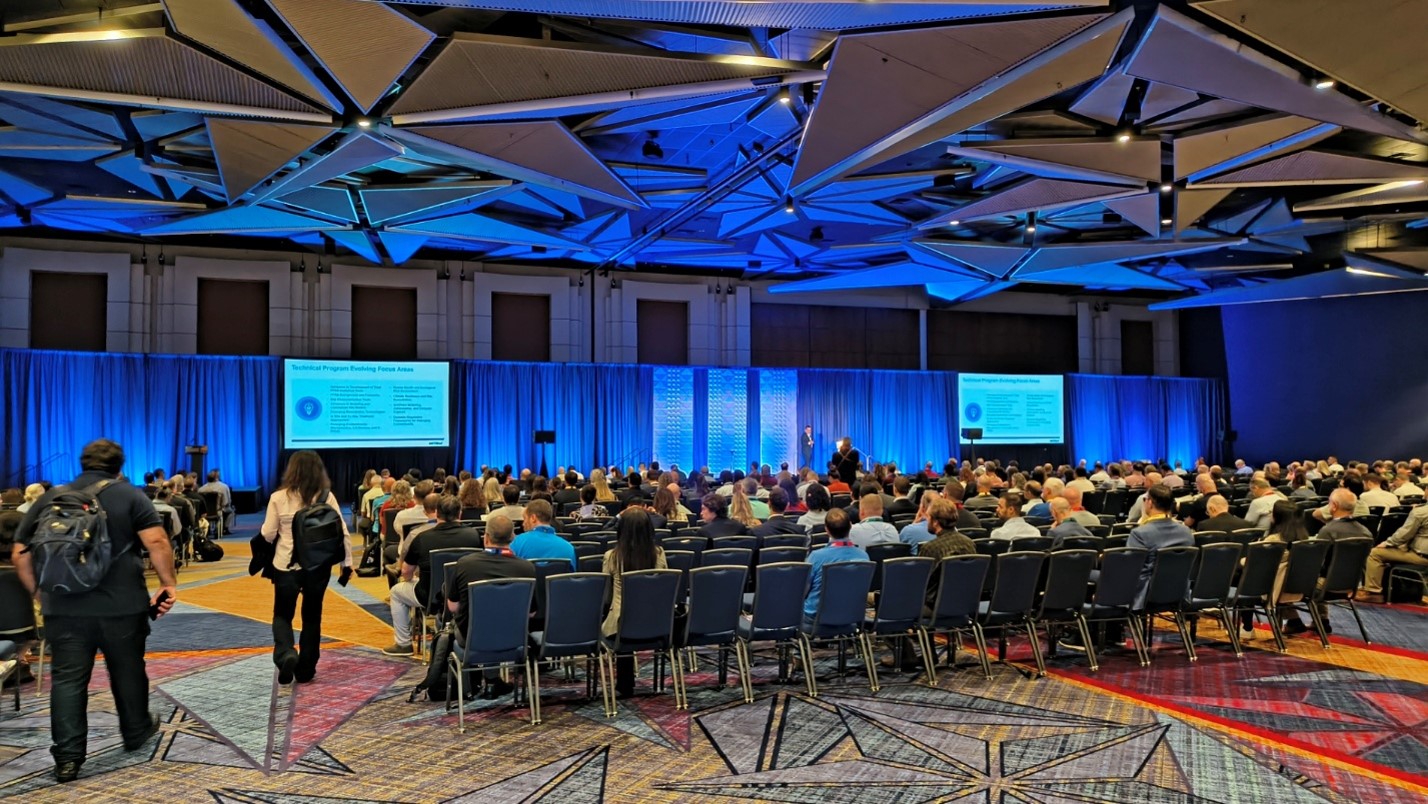
Key insights from the 2026 Battelle Chlorinated Conference in Fort Worth
The 14th International Conference on Remediation of Chlorinated and Recalcitrant Compounds, held this year in Fort Worth, Texas, once again demonstrated why Battelle remains the premier gathering for environmental remediation professionals worldwide. The conference brought together regulators, consultants, site owners, researchers, technology developers, and remediation practitioners to discuss emerging technologies, lessons learned, and future directions in site characterization and remediation.
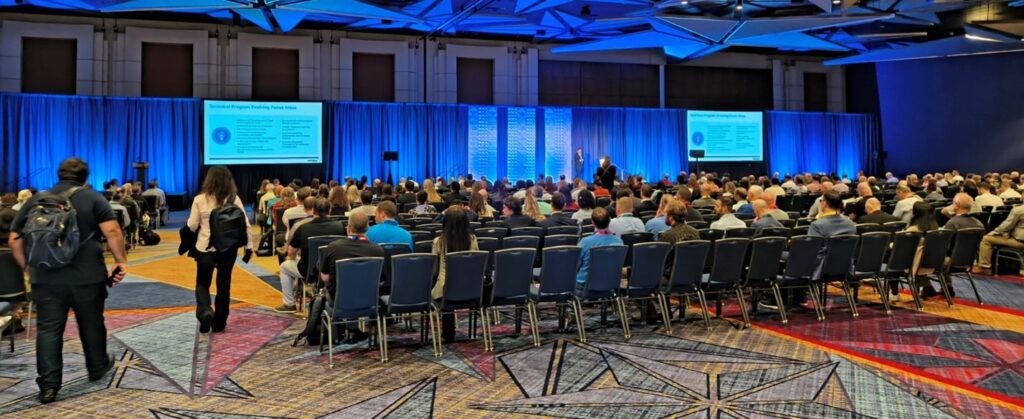
One of the strongest themes throughout the conference was the continued evolution from isolated remediation technologies toward integrated site management systems that combine characterization, remedial design, implementation, performance monitoring, and adaptive management into a continuous process.
Takeaway 1: Better Geology Leads to Better Remedies
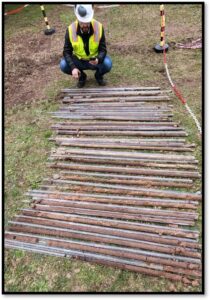
A recurring message from several technical sessions and panel discussions—including the Remediation Geology panel—was that many remediation challenges can be traced back to incomplete understanding of site geology and hydrogeology.
For decades, remediation projects have often focused on contaminant chemistry while underestimating the importance of geologic heterogeneity, preferential flow pathways, matrix diffusion, and the spatial distribution of permeability. The conference highlighted growing recognition that improving Conceptual Site Models (CSMs) requires a stronger emphasis on geology, stratigraphy, depositional environments, and contaminant architecture. Sequence stratigraphy has long been applied in oil and gas exploration but is only now receiving the attention it deserves in remediation design.
Advanced High-Resolution Site Characterization (HRSC) tools continue to play a critical role in defining contaminant distribution and hydrostratigraphic controls. Technologies such as MIP, OIP, HPT, EC logging, direct-push NMR, and other direct-sensing tools are increasingly being integrated to create more defensible three-dimensional CSMs and improve remedy selection and application.
Takeaway 2: Characterization Through Implementation
One of the most significant shifts discussed at the conference was the concept that characterization should not stop once a remedy is selected.
Historically, site characterization, remedial design, implementation, and performance monitoring have often been treated as separate project phases. Today, leading practitioners are increasingly viewing remediation as a continuous learning process.
The concept of Remedial Design Characterization (RDC) continues to gain momentum. Rather than collecting data solely to support remedy selection, characterization activities are increasingly being designed to support implementation decisions such as amendment selection, injection spacing, injection pressures, and treatment-zone architecture.
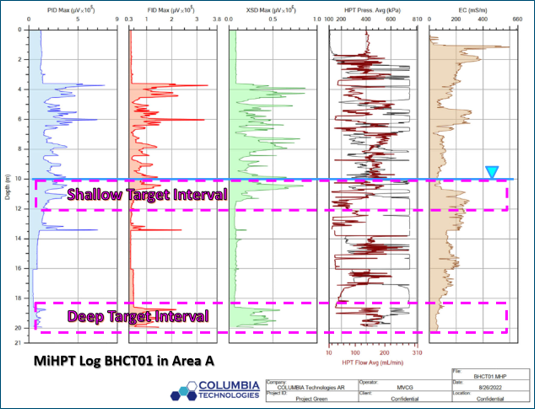
Injection Process Monitoring (IPM) further extends this concept by allowing field teams to collect valuable characterization information during remedy implementation. Real-time monitoring of pressures, flow rates, amendment acceptance, and distribution patterns can provide immediate feedback regarding subsurface conditions and treatment effectiveness.
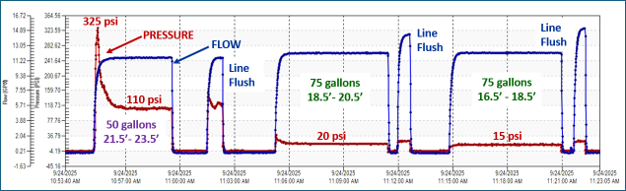
The result is a more adaptive and data-driven approach that reduces uncertainty while improving remedial outcomes.
Takeaway 3: Combined Remedies Continue to Evolve
Another dominant trend was the growing use of combined and sequential in-situ remedies.
The industry continues to move away from reliance on single amendments and toward integrated treatment approaches that leverage multiple physical, chemical, and biological processes.
Examples discussed throughout the conference included combinations of:
- Nanoscale, microscale, and sulfidated zero-valent iron (ZVI)
- Activated carbon with biotic or abiotic additives
- Advances in enhanced reductive dechlorination
- Iron sulfides and sulfur-amended systems
- Biological augmentation
- Chemical reduction technologies
- Colloidal systems and substrates
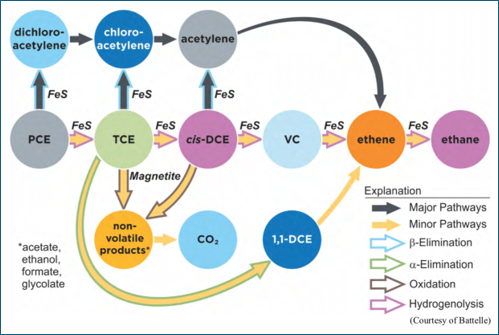
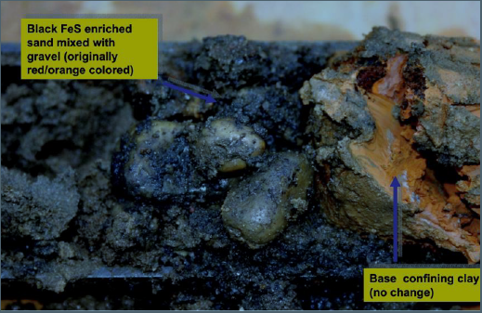
These combined remedies are being designed to address both contaminant destruction and long-term plume management while creating treatment environments that remain effective for years after implementation.
Biogeochemical Reductive Dechlorination (BiRD) methods were featured in several presentations and provide a strong example of a combined remedy. In this approach, a biological substrate creates reducing conditions that precipitate iron sulfides in place. These iron sulfides then act abiotically to reduce chlorinated VOCs without allowing daughter products, such as DCE, to accumulate.
Rather than asking, “What amendment should we inject?” practitioners are increasingly asking, “What treatment environment do we need to create?”
Takeaway 4: PFAS Continues to Drive Innovation
While chlorinated solvents remain a primary focus of the conference, PFAS was an increasingly important topic across many sessions.
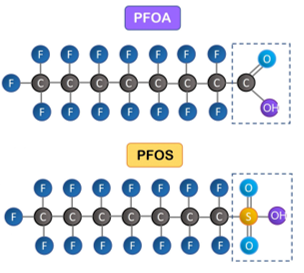
Current in-situ PFAS technologies continue to focus primarily on containment and mass reduction through sorption and sequestration. Injectable activated carbon, colloidal carbon products, modified clays, and other reactive media are being used to limit plume migration and reduce groundwater concentrations.
At the same time, significant research efforts are underway to develop technologies capable of destructive PFAS treatment, including advanced oxidation, advanced reduction, electrochemical treatment, plasma technologies, and other emerging approaches.
Although many destructive PFAS technologies remain in the developmental or pilot-testing stage, the industry is clearly moving toward treatment strategies that combine containment, concentration reduction, and eventual destruction.
Takeaway 5: Adaptive Management Is Becoming the New Standard
Another major takeaway was the increasing acceptance of adaptive site management principles.
Environmental remediation projects frequently encounter uncertainties related to geology, contaminant distribution, amendment delivery, and treatment performance. Rather than treating these uncertainties as project failures, adaptive management frameworks recognize uncertainty as a normal component of complex environmental systems.
Several presentations demonstrated how real-time field data, performance monitoring, and ongoing refinement of conceptual site models can be used to optimize remedies throughout implementation.
The Interstate Technology & Regulatory Council (ITRC) continues to play an important role in advancing these practices through guidance documents, technical training, and collaborative frameworks that support both innovation and regulatory acceptance.
Looking Forward
Perhaps the most important lesson from Battelle 2026 is that remediation is no longer viewed as a series of independent activities. The future of environmental remediation lies in integrating characterization, geology, remedial design, implementation, monitoring, and adaptive management into a single continuous process.
Success increasingly depends on developing better conceptual site models, understanding subsurface geology at a higher resolution, leveraging multiple treatment technologies, and using field data to continuously improve decision-making.
As remediation practitioners continue to address chlorinated solvents, PFAS, petroleum hydrocarbons, mining impacts, and emerging contaminants, the industry appears to be moving toward a more holistic approach—one that combines science, engineering, geology, and real-time data to achieve more effective and sustainable environmental outcomes.
The technologies and ideas presented in Fort Worth suggest that the next decade of remediation will be defined not by any single technology, but by our ability to integrate characterization, treatment, and adaptive management into smarter and more resilient cleanup strategies.