
Connect with Vista GeoScience
Find upcoming conferences, workshops, presentations, and other industry events where you can connect with the Vista GeoScience team.

- This event has passed.
Non-Destructive UV-Optical Device in Clear Well Casing for Monitoring Geology, LNAPL Distribution, and Natural Source Zone Depletion (NSZD)
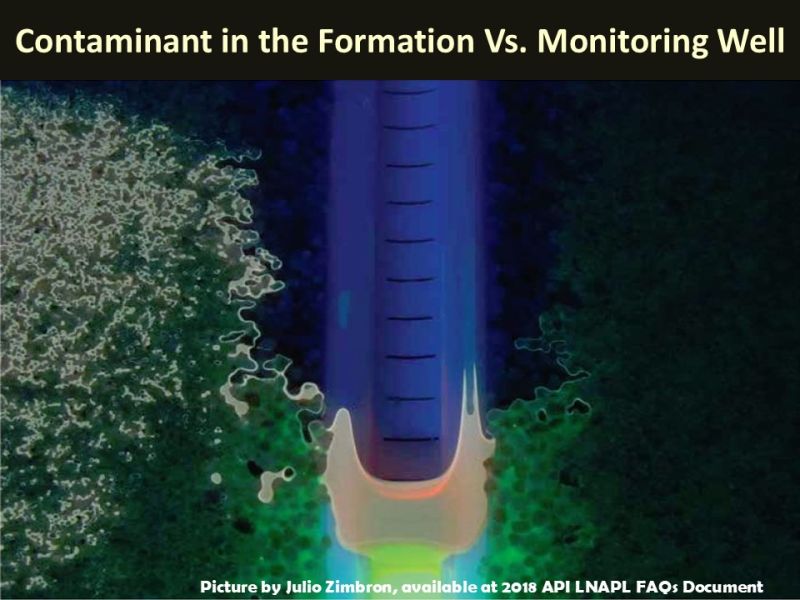
High-resolution site characterization (HRSC) tools provide detailed vertical profiles of subsurface contamination. Some tools also capture lithology data, which helps develop more complete conceptual site models (CSMs) for light non-aqueous phase liquids (LNAPL). However, HRSC surveys often occur only once due to the cost of large equipment and mobilization. Meanwhile, subsurface conditions change over time. Groundwater levels shift, and soil saturations vary. As a result, contaminant distributions evolve in ways that one-time surveys can’t track. To meet this challenge, E-Flux developed a tool that allows repeat vertical surveys at high temporal resolution, adding a critical time-based dimension to traditional HRSC.
This UV-optical monitoring tool installs inside a solid, dry well casing that includes clear sections for imaging. Once in place, a device shines UV and visible light into the surrounding formation. This light reveals pore-scale features such as LNAPL presence, distribution, and soil structure. The system creates detailed vertical digital images, which reflect current soil conditions and contaminant patterns. Additionally, it captures visible changes over time in LNAPL saturation and soil water content. This capability makes it easier to track natural source zone depletion (NSZD) processes and changes related to site hydrogeology.
The presentation will also explain how the technology compares to standard well-based methods. E-Flux will share lessons learned about how groundwater fluctuations and soil types affect LNAPL redistribution. Presenters will include both lab and field data, offering practical insights into when and where the tool performs best. Two field studies will demonstrate how UV-optical imaging complements or improves upon traditional LNAPL monitoring approaches. By the end, attendees will understand how to apply this new monitoring method to support ongoing remediation, improve site models, and better measure NSZD activity over time.
register HERE